
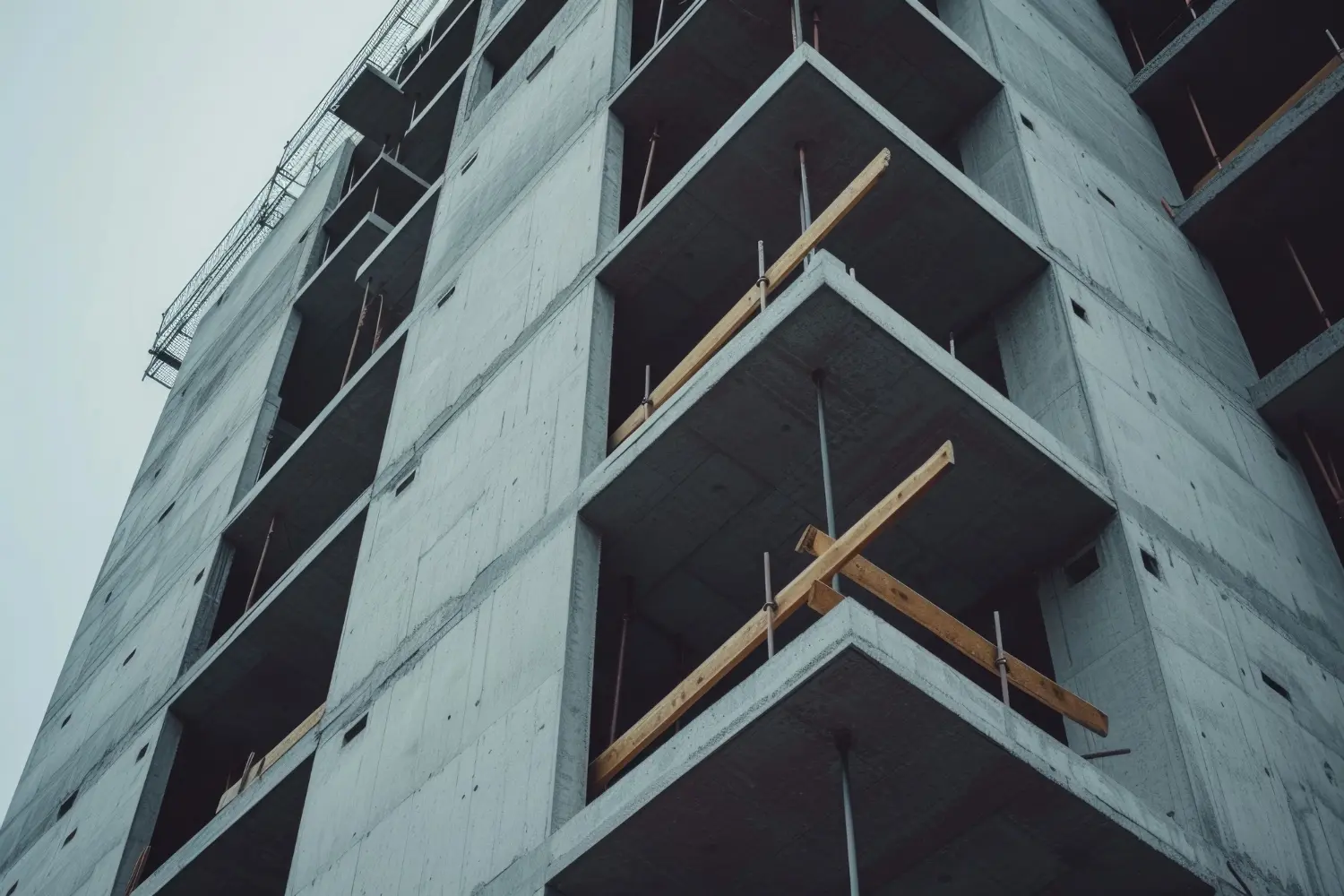
Cold Weather Construction in India: How Precast Concrete Helps Reduce Weather-Related Delays
Construction timelines are influenced by more than labour availability, material procurement and project planning. Weather conditions can also affect how efficiently concrete work is carried out, particularly when temperatures drop during winter.
Across parts of northern India, Rajasthan and other regions experiencing colder winter conditions, construction teams may need to pay closer attention to concrete placement, curing, temperature protection and site productivity. Even when daytime temperatures appear suitable for work, colder nights and early mornings can affect concrete during its initial stages of strength development.
For infrastructure developers, EPC contractors and industrial construction companies, this creates an important planning challenge. Construction must continue without compromising concrete quality, structural performance or project timelines.
One approach increasingly considered for suitable applications is precast concrete construction.
Unlike conventional cast-in-situ construction, where concrete components are produced at the final project location, precast concrete components are manufactured in a facility and transported to the site for installation. This can reduce the number of concrete casting activities that need to be carried out at the site and allow manufacturing to progress independently of some site conditions.
Sachi Precast manufactures concrete components for infrastructure, industrial and renewable energy projects, including RCC pipes, box culverts, U drains, manhole chambers, retaining walls and footings with pedestals.
This guide explores how cold weather affects construction, why winter concreting requires careful planning, and where precast concrete can help projects maintain progress during colder months.
How winter weather affects construction projects
Winter conditions are not the same across India. While Gujarat may experience relatively moderate winters in many areas, regions such as Rajasthan, Punjab, Haryana, Uttar Pradesh, Delhi NCR, Himachal Pradesh and parts of central India can experience more significant temperature variations.
Construction teams should consider local weather conditions rather than treating winter as a uniform season across the country.
Lower temperatures can slow concrete strength development
Concrete gains strength through hydration, a chemical process involving cement and water.
When temperatures decrease, hydration generally slows. This can affect the rate at which concrete gains strength and may influence the timing of subsequent construction activities.
For projects involving cast-in-situ foundations, slabs, structural elements or other concrete work, this may require adjustments to the construction programme.
Cold mornings and temperature fluctuations
Winter conditions can change considerably between daytime and nighttime.
Concrete placed during the day may experience lower temperatures overnight, especially in exposed areas. Project teams must consider the expected temperature conditions during the early stages of curing rather than relying only on the temperature at the time of placement.
Fog and visibility can affect site operations
In some regions, winter fog can affect transportation, crane operations, movement of construction equipment and the delivery of materials.
When visibility is poor, certain operations may need to be delayed or adjusted for safety.
Construction schedules may become less predictable
When weather-sensitive activities are delayed, the impact can extend beyond the activity itself.
For example, a delay in concrete placement or strength development may affect formwork removal, backfilling, installation of subsequent components or the mobilisation of other contractors.
The impact depends on the construction sequence and whether the delayed activity lies on the project's critical path.
Why cold weather concreting requires additional care
Concrete construction during colder conditions requires appropriate planning to protect the material during placement and early curing.
The specific precautions depend on the temperature, concrete mix, structural element, exposure conditions and project specifications.
Concrete needs suitable conditions to gain strength
Cold temperatures can slow concrete's early strength development.
If concrete is exposed to freezing conditions before developing sufficient strength, its performance and durability may be affected.
This is why concrete placed during colder weather may require additional temperature monitoring, protection and curing measures.
Frozen surfaces can affect concrete placement
Concrete should not be placed against frozen ground or surfaces containing ice or frost where these conditions compromise the placement or bond.
Site preparation should ensure that the surfaces receiving concrete are suitable according to the project requirements.
Curing and protection become particularly important
Concrete needs appropriate curing conditions to support strength development and durability.
During colder weather, project teams may need to provide protection against low temperatures and maintain suitable curing conditions for the required period.
Construction cannot be rushed to compensate for cold weather
Removing formwork, loading concrete or progressing to subsequent activities before the required strength has been achieved can create structural and safety risks.
The project schedule must account for actual concrete strength development and the applicable engineering requirements.
The challenges of conventional on-site concreting during winter
Cast-in-situ construction remains an essential method across the construction industry. However, when concrete is produced and placed at the project site, certain activities become dependent on site conditions and weather.
1. Weather-sensitive concrete placement
Concrete placement may need to be planned around expected temperatures and environmental conditions.
In colder regions, project teams may need additional measures to protect concrete during placement and early curing.
2. Additional curing and protection requirements
Depending on the conditions, concrete may require protective coverings, temperature monitoring, suitable curing arrangements or other measures specified by the project.
These requirements may introduce additional labour, materials and coordination.
3. Sequential construction activities
In conventional construction, formwork preparation, reinforcement placement, concrete casting, curing and subsequent work may follow a largely sequential process.
When one activity takes longer than planned, subsequent work may also be affected.
4. Labour and equipment utilisation
Cold mornings, fog and changing weather conditions can affect working hours or the productivity of some activities.
Equipment and labour may need to be rescheduled when weather-sensitive work cannot proceed as planned.
5. Site-level coordination
Winter construction can require additional coordination between the concrete supplier, contractor, site engineer, testing team and other stakeholders.
The challenge is not just carrying out the concrete work—it is ensuring that the next activity can begin at the right time.
How precast concrete can help reduce winter construction delays
Precast construction changes where concrete components are manufactured and how they are incorporated into the construction programme.
For suitable applications, it can reduce the amount of concrete production that must take place at the final site and support a more organised installation sequence.
Manufacturing can take place independently of site preparation
Selected concrete components can be manufactured while the project site is being prepared.
For example, while a site team works on excavation, foundations, access routes or installation areas, precast components can be produced according to approved drawings and specifications.
This allows manufacturing and site preparation to progress in parallel instead of waiting for one activity to be completed before the other begins.
Reduced dependence on site-based concrete casting
Where precast components replace suitable cast-in-situ elements, certain on-site activities such as formwork preparation, reinforcement placement and concrete casting may be reduced.
This can be beneficial at sites where weather conditions, space limitations or labour availability make extensive concrete work difficult.
Better scheduling of installation activities
Precast components can be manufactured and delivered according to an agreed installation sequence.
This can help contractors plan equipment, labour, transport and site access more efficiently.
However, components should only be delivered when the site is ready to receive, store or install them.
Factory-based manufacturing and quality checks
Precast manufacturing can support repeatable production processes and inspection before dispatch.
This may help reduce certain dimensional inconsistencies when supported by appropriate manufacturing quality control.
The actual quality of precast components depends on the manufacturer's processes, applicable specifications and inspection requirements.
Can precast construction help reduce winter project costs?
Precast concrete may help reduce certain project costs, but it is not automatically the cheaper option for every construction project.
The commercial advantage depends on which site activities are replaced, the scale of the project, manufacturing lead time, transportation, installation requirements and the total construction programme.
Reduced on-site labour for selected activities
For suitable components, precast construction may reduce certain site-based activities involving formwork, reinforcement placement and concrete casting.
This may help reduce the labour required for specific work packages.
Less dependence on weather-sensitive activities
Where precast replaces selected on-site concrete work, some activities may become less dependent on the availability of suitable weather for concrete placement.
This does not remove weather-related risks from transportation, lifting or installation.
Potential reduction in schedule-related overheads
If precast construction helps a project complete selected activities earlier, it may also help reduce certain time-related project expenses.
These could include site supervision, equipment rental, temporary facilities, labour mobilisation and other construction overheads.
The actual savings depend on the project and should be evaluated as part of the overall cost comparison.
Fewer opportunities for certain types of rework
Factory-based production and dimensional checks can help reduce some inconsistencies when supported by appropriate quality procedures.
This may reduce the risk of certain correction activities during installation, although accurate design, site measurements and installation checks remain essential.
Which precast products are suitable for winter infrastructure construction?
The appropriate precast products depend on the project design, application, site conditions and engineering requirements.
Precast U drains for surface drainage
Drainage infrastructure is important across industrial developments, roads, commercial sites and infrastructure projects.
Precast U drains can be considered for suitable surface-water drainage applications where repeated sections are required.
They may help reduce certain on-site casting activities and support a more organised installation sequence.
Explore Sachi Precast's U drains with covers.
RCC box culverts for road crossings
Box culverts provide enclosed passages beneath roads and other structures where the design requires a defined drainage opening.
Precast box culverts can be considered for suitable projects where manufacturing, transportation and installation conditions support their use.
Learn more about precast box culverts.
RCC pipes for underground drainage
RCC pipes can form part of underground drainage and water-conveyance systems.
The required diameter, class, jointing and installation arrangement must be established by the project design.
Explore RCC pipes and Hume pipes.
Precast manhole chambers for underground access
Manhole chambers provide access to suitable underground drainage and utility networks.
Precast chambers can be considered where their dimensions, connections, loading and installation conditions match the approved design.
See Sachi Precast's manhole chambers.
Precast foundations for suitable structural applications
Precast foundations may be considered for selected structural and infrastructure applications where the design, soil conditions, connection details and installation method support their use.
Explore footings with pedestals.
Retaining walls for site development
Retaining walls may be required to manage changes in ground elevation and create suitable development platforms.
Precast retaining wall systems can be considered where the engineering design and site conditions make them appropriate.
Explore precast retaining walls.
How to plan a winter construction project using precast concrete
Selecting precast components is only one part of the process. The manufacturing and installation programme must be coordinated with the overall project schedule.
Finalise engineering drawings and specifications
Manufacturing should begin only after the required drawings, dimensions, quantities and technical specifications have been reviewed and approved.
Late design changes can affect mould preparation, manufacturing, transportation and installation schedules.
Identify suitable components early
Review the civil works package to identify repetitive or suitable concrete components that could be manufactured off-site.
The decision should consider structural design, site access, transportation, installation equipment and total cost.
Coordinate manufacturing with site readiness
The site must be ready to receive, store or install components when they arrive.
Manufacturing and dispatch schedules should be coordinated with foundations, access routes, lifting arrangements and the installation sequence.
Plan transportation and unloading
Large precast components may require specific transport vehicles, route planning and lifting equipment.
These arrangements should be confirmed early, especially for projects with multiple delivery locations or restricted site access.
Confirm quality checks before production
The project team should establish the applicable inspection, testing and acceptance requirements before manufacturing begins.
This helps ensure that supplied components meet the project's specifications.
Prepare a weather-aware installation programme
The construction programme should identify activities that are particularly sensitive to temperature, fog, wind, rainfall or ground conditions.
Where suitable, manufacturing can be planned separately from site activities to reduce exposure to certain weather-related delays.
Why Sachi Precast is relevant for winter infrastructure projects
Sachi Precast is a Gujarat-based precast concrete manufacturer serving infrastructure, industrial and renewable energy construction applications.
Its product range includes drainage, foundation, retaining and other precast components that may be relevant to large civil works packages.
A range of precast products for infrastructure requirements
Infrastructure projects often require multiple types of precast components rather than a single product.
Sachi Precast's product portfolio includes RCC pipes, box culverts, U drains, manhole chambers, junction chambers, slope drains, retaining walls, footings, slabs and other precast solutions.
The suitability, dimensions and availability of each component should be confirmed against the project specification.
Experience across infrastructure and renewable energy projects
Sachi Precast's published project portfolio includes the Adani Green Renewable Park, NTPC Solar Park, Tata Power Mundra and the Mumbai–Ahmedabad Bullet Train project.
These projects demonstrate the company's involvement in infrastructure environments requiring different precast components and project-level coordination.
Manufacturing and project coordination
Depending on the project, precast procurement may involve manufacturing only or a wider scope covering supply and installation.
Buyers should confirm the exact responsibilities, schedule, technical requirements and commercial terms for their project.
To discuss a project requirement, visit Sachi Precast's contact page.
Frequently Asked Questions
Does cold weather affect concrete construction in India?
Yes. In regions experiencing lower winter temperatures, concrete strength development may slow, and precautions may be required during placement, curing and early-age protection. The level of precaution depends on actual site conditions and project specifications.
Is precast concrete better for winter construction?
Precast can be advantageous for suitable applications because selected components are manufactured away from the final site. This can reduce certain weather-sensitive on-site activities and allow manufacturing to progress alongside site preparation.
However, transportation, lifting and installation remain dependent on site and weather conditions.
Can precast construction reduce project delays?
It can help reduce certain delays by allowing manufacturing and site preparation to progress in parallel, reducing selected on-site activities and supporting organised installation planning. Actual time savings depend on the project.
Is precast concrete cheaper than cast-in-situ construction?
Not in every situation. The total cost depends on manufacturing, transportation, lifting, installation, design, quantities, site conditions and the activities replaced. A complete installed-cost comparison is required.
Which precast products are commonly used in infrastructure projects?
Infrastructure projects may use RCC pipes, box culverts, U drains, manhole chambers, retaining walls, footings, slabs and other precast components depending on their design and application.
What should project teams consider before ordering precast components?
Project teams should confirm drawings, dimensions, quantities, specifications, manufacturing lead time, transportation, site access, installation sequence, lifting arrangements and inspection requirements before placing an order.
Conclusion
Winter construction can introduce additional considerations for projects in regions experiencing low temperatures, particularly when concrete placement, curing, site operations and transportation are affected by weather.
For suitable applications, precast concrete can help reduce selected on-site activities, allow manufacturing and site preparation to progress in parallel, and support more organised installation planning.
The key is not simply to replace conventional concrete work with precast components. It is to plan the entire construction sequence so that manufacturing, transportation, site readiness and installation work together.
Sachi Precast offers a range of precast concrete products for infrastructure, industrial and renewable energy projects, supported by documented experience across major developments.
For projects preparing to execute construction during winter, early planning can help identify suitable precast components, coordinate manufacturing schedules and reduce avoidable delays.
Contact Sachi Precast to discuss your project requirements.
Technical references
Build Smarter With Sachi Precast
From ready-made precast components to fully customized solutions, we handle everything from manufacturing to on-site erection — delivering faster, stronger, and more efficient construction outcomes.